
The History of Liebherr Wine Fridges: From Cranes to Cellar-Grade Cooling
Liebherr is one of the more unusual names in wine storage — not because the fridges aren't good, but because the company that makes them started out building construction cranes, not kitchen appliances. Here's how a German heavy-machinery maker ended up producing some of the most respected wine cabinets in the world.
1949: A crane company is born
Liebherr was founded in 1949 by Hans Liebherr in Kirchdorf an der Iller, in what was then West Germany. His first product wasn't a fridge at all — it was the mobile tower crane, designed to speed up post-war reconstruction. Within a decade, Liebherr had production facilities across Europe and an international market presence, laying the foundation for what is today a German-Swiss group spanning construction equipment, mining, aerospace, and — improbably — refrigeration.
1954: The move into refrigeration
The pivot to appliances came almost by accident. In 1953, Hans Liebherr was tipped off by his local bank manager that a refrigerator factory had gone bankrupt and was up for sale. Liebherr visited the plant, studied its production costs and pricing, and compared them against a refrigerator he'd personally just bought. He decided there was a real opportunity — but rather than buy the bankrupt factory, he chose to build his own production line from scratch at Ochsenhausen in southern Germany.
The timing mattered. Only around one in ten German households owned a refrigerator at the time, and the postwar "economic miracle" was driving rapid growth in consumer demand. The first Liebherr refrigerator rolled off the Ochsenhausen line in 1954, with mass production starting the following year. Remarkably, Ochsenhausen is still one of Liebherr's key manufacturing sites for household refrigeration today.
1980s: Liebherr enters wine storage
Liebherr's refrigeration line expanded steadily through the 1960s and 70s — freezers, cold rooms, and eventually dedicated wine storage. The company began focusing seriously on wine cabinets in the early 1980s, developing models that ranged from small under-counter units to large multi-temperature-zone cabinets, and building a reputation as one of the more serious engineering-led entrants into a category that, at the time, was still fairly niche.
Two technologies became central to how Liebherr differentiated its wine fridges from ordinary refrigeration:
- Vibration-dampened compressors. Wine ages best when left undisturbed — vibration is known to interfere with the maturation process — so Liebherr began mounting entire refrigeration systems on cushioning to isolate the cabinet interior from compressor vibration.
- Independent temperature zones, later extended into the Vinidor and Vinothek ranges, allowing a single cabinet to hold different wine types at their correct serving or cellaring temperatures simultaneously, rather than forcing an entire cabinet to one setting.
Building out the modern range
Over time, Liebherr's wine fridge lineup grew into several distinct series, each aimed at a different kind of collector:
- Vinothek — single and dual-zone cabinets designed to replicate long-term cellar conditions.
- Vinidor — multi-zone cabinets giving collectors more flexibility between cellaring and serving temperatures, including layouts that dedicate two-thirds of capacity to cellaring rather than the standard 50/50 split.
- GrandCru — Liebherr's cellar-style range, built for collectors who want conditions as close as possible to an underground cellar.
- Monolith — the top of the range, described by Liebherr itself as the product of more than 60 years of accumulated refrigeration engineering.
Across the range, Liebherr also built in details aimed specifically at long-term wine preservation: UV-protected glass doors to prevent light damage, activated charcoal air filtration to stop odours tainting stored wine, and precise humidity control to keep corks from drying out — effectively trying to replicate underground cellar conditions inside a domestic appliance.
Why the crane-to-cellar story still matters
It's a genuinely unusual brand history: a company best known globally for mobile cranes and mining equipment is also one of the most trusted names in wine refrigeration, and the engineering DNA shows up in small but meaningful ways — the low-vibration compressors, the precision temperature control, the attention to build quality that comes from a company that also makes heavy machinery for a living. Liebherr remains entirely family-owned, and the appliances division continues to sit alongside its construction and industrial businesses rather than having been spun off — a rarer setup than most people assume when they buy one for their dining room.
Explore the range
We carry a wide selection of Liebherr wine cabinets and fridge-freezers, from compact 18-bottle built-in units to the multi-zone GrandCru and Monolith series:
- Liebherr Built-in Wine Cabinets — dual and multi-zone built-in models
- Liebherr Fridge Freezers — integrated fridge and freezer units
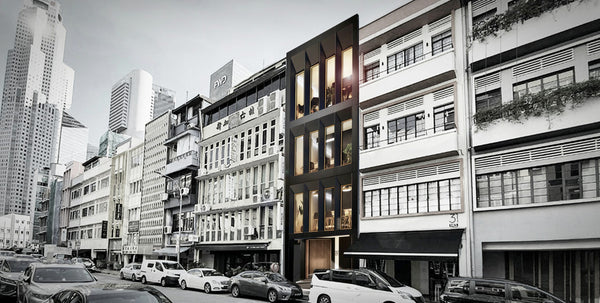
- Visit us for viewing at 32 Hongkong Street, Singapore